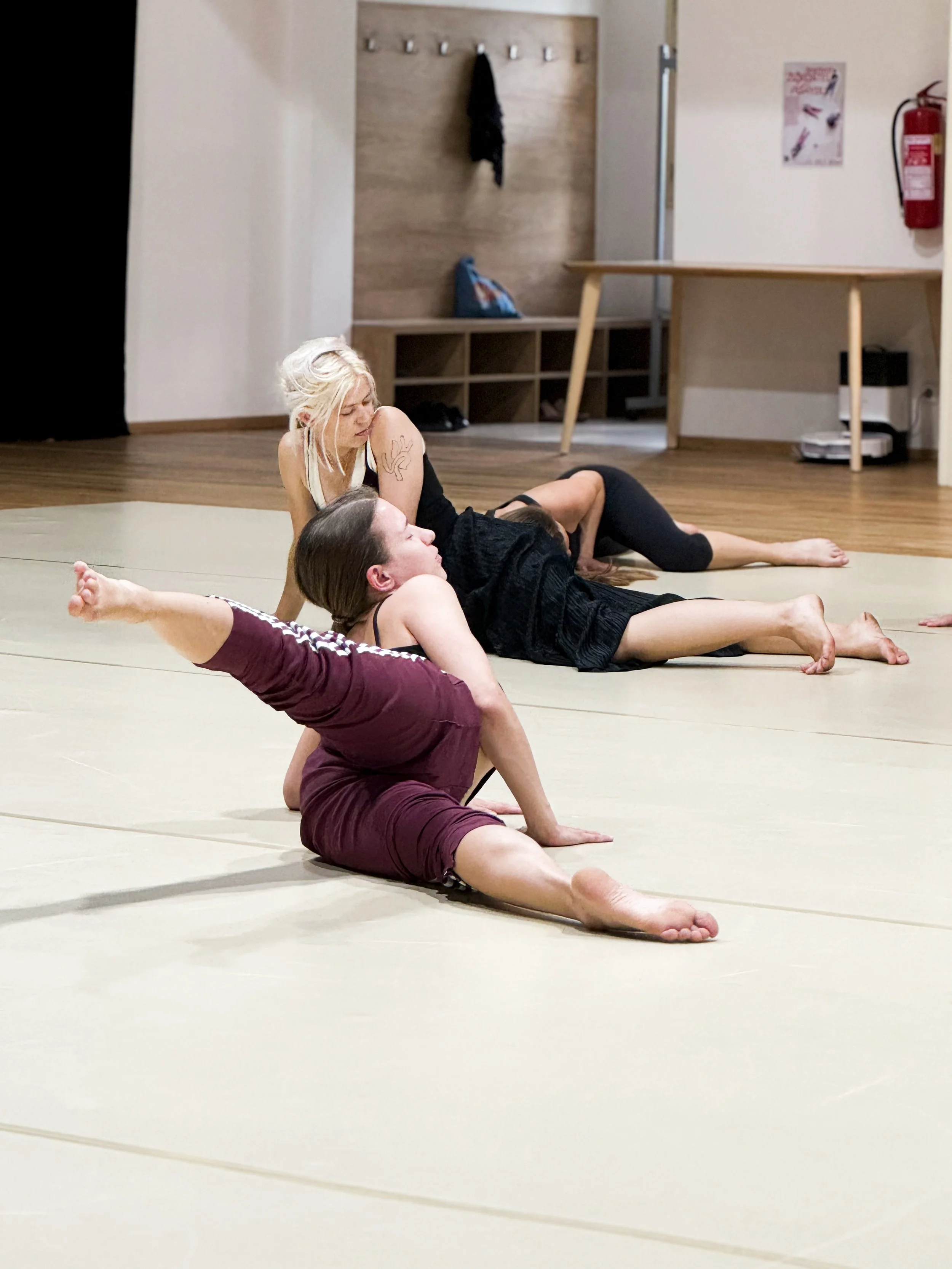
Eva Urbanová is a choreographer, dancer, and somatic practitioner whose teaching grows directly out of their artistic research on transformation, sensory intelligence, and the monstrous, shape-shifting body. They work with students ranging from children to advanced professionals, offering a deep and accessible approach that connects physical technique with imagination, bodily presence, and intuitive movement.
Rooted in contemporary dance, somatic practices, butoh, and their background in rhythmic gymnastics, Eva’s teaching approaches the body as a sensing, responsive organism. They work with shifts of state, tension, and attention, inviting participants to move through different physical and perceptual qualities. Their classes create conditions where movement slows down, listening sharpens, and unfamiliar bodily responses are allowed to appear
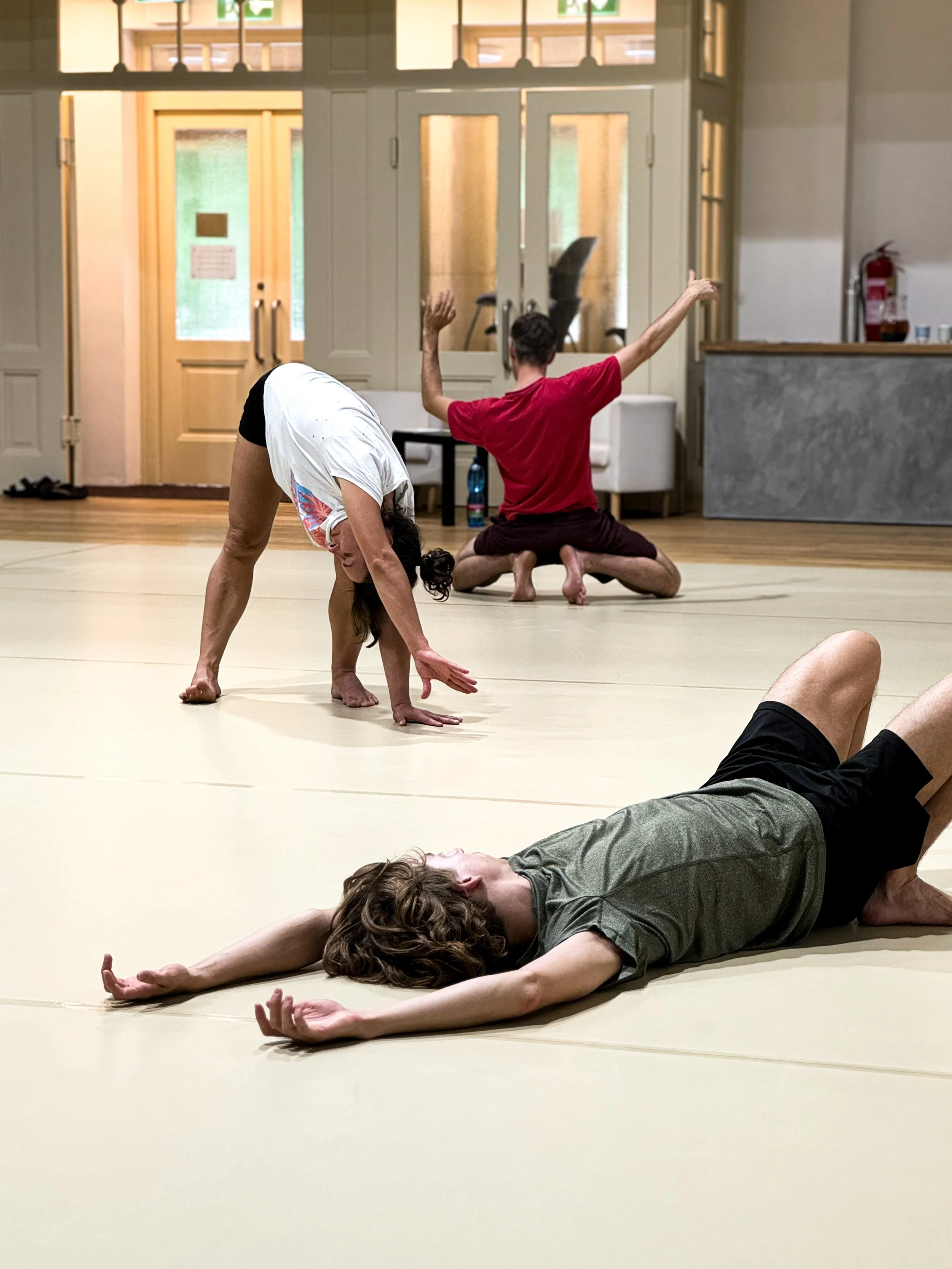
Their pedagogical approach is structured yet open, weaving together body scanning, guided improvisation, sensory awareness, touch work, and imaginative activation. They guide students through a progression that develops physical skill, emotional tone, and embodied self-trust. Eva’s aim is to create environments where participants can access intuitive, subconscious, poetic, and quietly uncanny layers of the body.
Central to their teaching is a critical view of dance training itself — as a system that tests, sorts, and normalizes bodies. Movement is approached not only as a technical practice, but as a place where habits, expectations, and power relations show up in the body. Through sensory and somatic work, students learn to notice how rhythm, effort, and expression are shaped, interrupted, or resisted, and to develop ways of moving that come from their own bodily logic rather than from stylistic compliance.
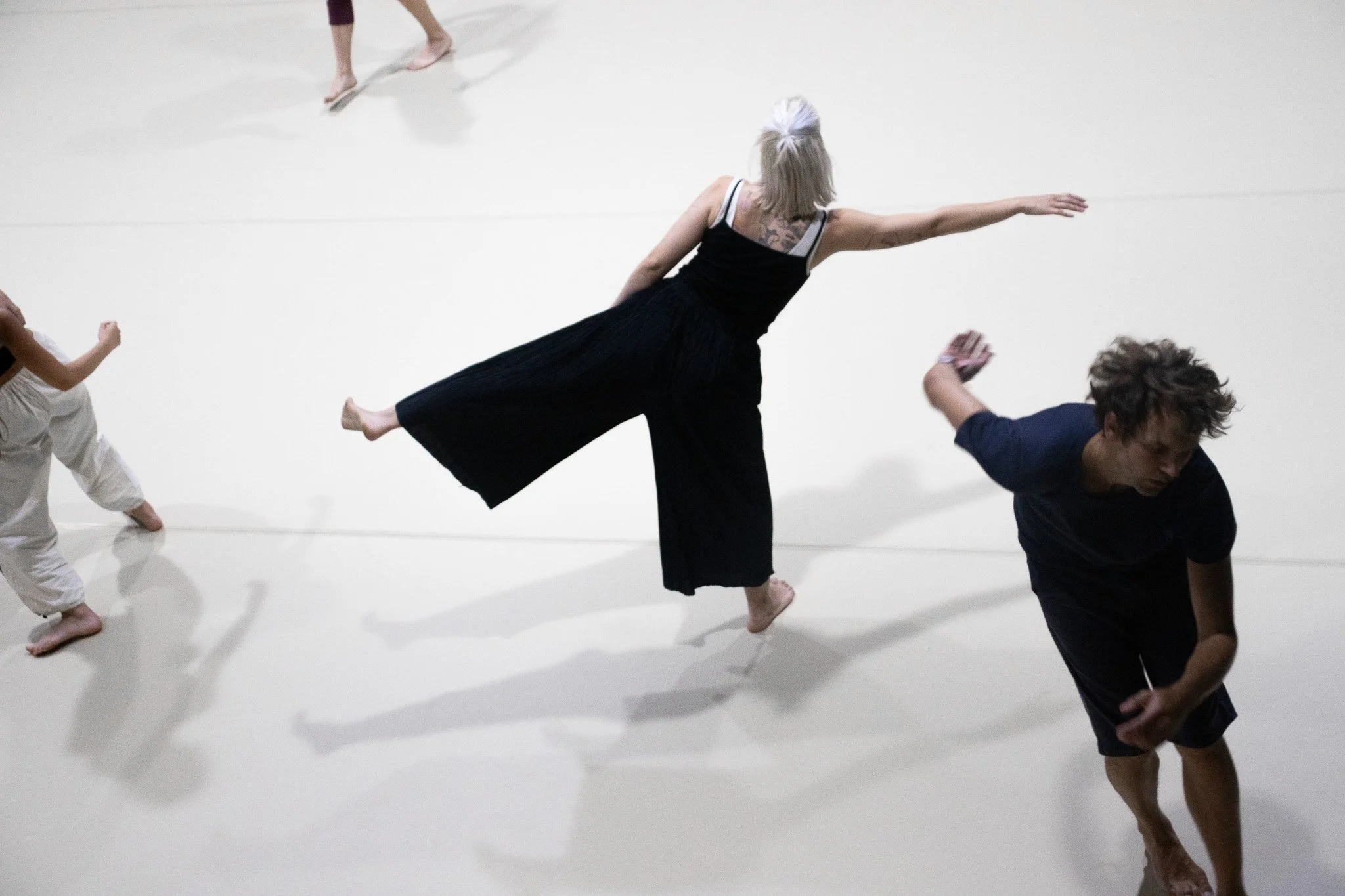
Eva approaches teaching as a provisional practice rather than a fixed role. Working with children, adolescents, beginners, non-professionals, and experienced practitioners, they remain attentive to how categories of level, ability, and professionalism discipline bodies before any movement begins. Rather than “adapting” the work to predefined levels, they treat each group as a specific situation, adjusting the conditions of attention, time, and permission through which movement can take place.